Piercing Aftercare: How to Care for a New Piercing
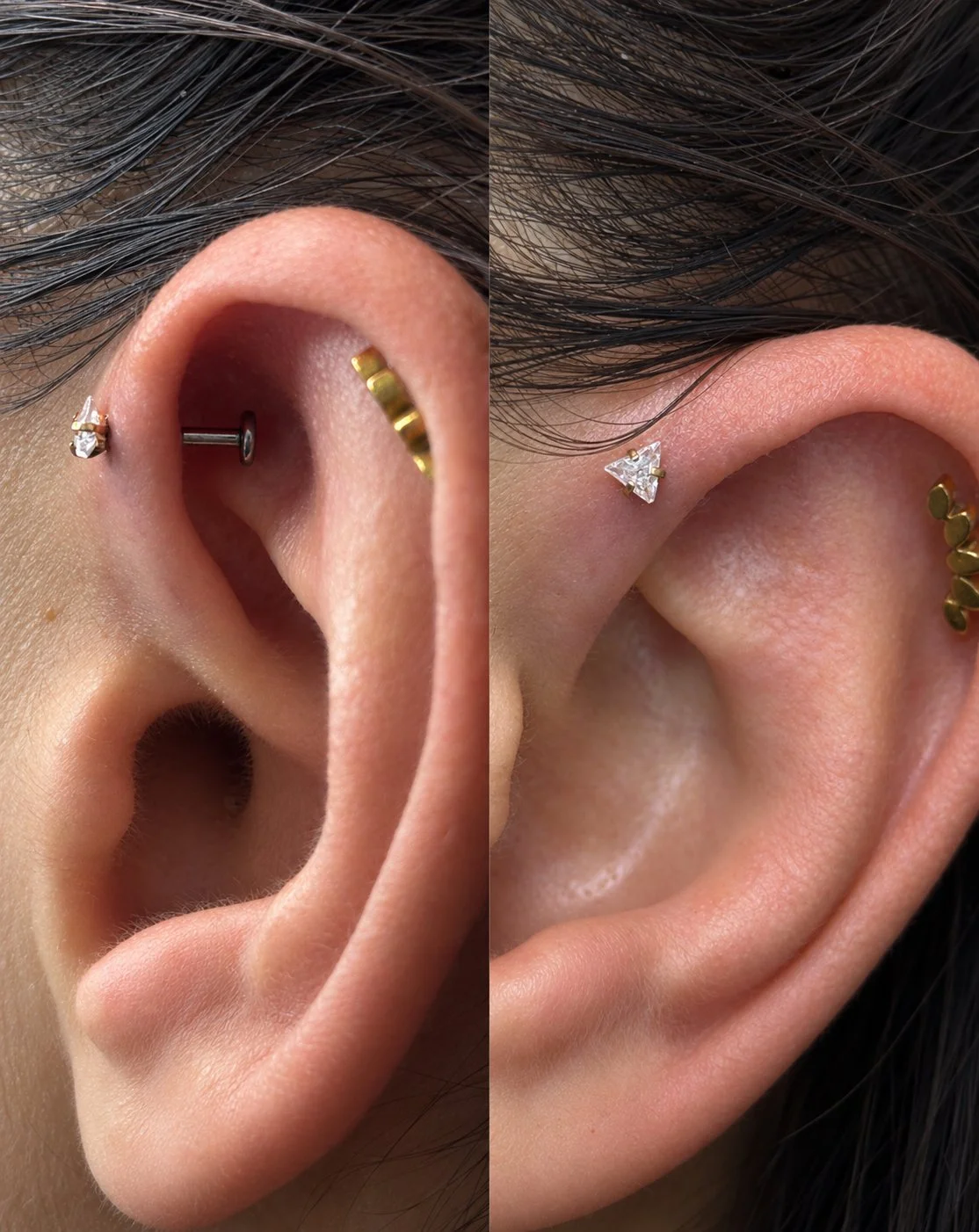
Keep your new piercing clean, dry, untouched, and free from unnecessary pressure while it heals.
For proper piercing aftercare, use sterile saline wound wash containing 0.9% sodium chloride and avoid over-cleaning, twisting, or playing with the jewelry.
Questions?
You have an open line with us during healing.
Contact Us
Terms & Conditions
-
Wash your hands first.
Spray the front and back of your piercing with sterile saline wound wash (0.9% sodium chloride) twice daily.
Allow crusting to soften and come away naturally.
Gently pat dry with clean, disposable gauze or paper towel.
Do not twist, rotate, or move the jewelry.
Avoid Q-tips, soap, alcohol, peroxide, ointments, and additional cleaning products.
Sterile saline gently rinses the piercing without harsh chemicals. It helps keep the area clean but does not sterilize the piercing or replace your body's natural healing process.
Avoid over-cleaning.
-
During the first few days, mild swelling, tenderness, warmth, light bleeding, or crusting can be normal.
A piercing may look healed on the outside before the tissue inside has fully healed, so avoid changing jewelry too early.
-
A piercing bump does not automatically mean infection or keloid.
Piercing bumps can be associated with:
sleeping on the piercing;
pressure or friction;
snagging;
over-cleaning;
irritating products;
unsuitable jewelry.
Continue gentle saline care and contact us if the irritation persists. An in-person consultation may be recommended so we can evaluate the jewelry, placement and possible sources of irritation.
Avoid alcohol, hydrogen peroxide, aspirin paste and unverified “piercing bump treatments,” as these may cause additional irritation.
-
Some tenderness, mild swelling, warmth, light bleeding and crusting can occur during normal piercing healing.
Possible signs of a piercing infection can include:
redness or swelling that continues to spread or worsen;
increasing pain or heat around the piercing;
thick yellow or green discharge;
red streaks extending from the piercing;
fever, chills or feeling unwell.
Contact us if you're unsure whether your piercing is experiencing normal irritation or healing.
Seek medical care if you suspect an infection, especially if symptoms are worsening or you develop fever, chills or spreading redness. Cartilage infections deserve particular attention because they can become more serious.
If you suspect an infection, do not remove the jewelry unless instructed to do so by a qualified healthcare professional.
-
Avoid:
touching with dirty hands;
twisting jewelry;
sleeping directly on it;
swimming or hot tubs while healing;
alcohol or peroxide;
makeup or skincare directly on it;
changing jewelry too early;
constant pressure from headphones or clothing.
-
Approximate piercing healing times:
6–8 weeks+: septum, tongue
2–3 months+: eyebrow, lip/labret
3–4 months+: nostril, dermal
6–9 months+: helix, tragus, rook, daith, conch, industrial, navel, nipple, surface piercingsA professional downsizing may be appropriate before full healing for some piercings, but decorative jewelry changes should generally wait until the piercing has healed.
-
A professional jewelry check is recommended approximately 4 weeks after your piercing, although some piercings may need an earlier or later adjustment.
Downsizing replaces the initial longer jewelry with a shorter, properly fitted piece once swelling decreases. This helps reduce unnecessary movement, snagging, pressure, and irritation.
Downsizing is not necessary for every piercing, but it is strongly recommended when excess jewelry length could interfere with healing.
Never change healing jewelry yourself. Schedule a professional assessment to determine whether downsizing is appropriate.
-
Start by removing the source of irritation, not by treating the bump aggressively.
Avoid pressure, stop touching or playing with the piercing, and continue gentle saline aftercare. If the piercing bump persists, contact us so we can check whether jewelry size, material, angle, placement or another source of irritation may be contributing. Cartilage piercings can be particularly prone to irritation and slow healing.
-
Contact us if you have questions about your piercing aftercare, persistent irritation, a piercing bump, unexpected swelling, jewelry that feels too tight or loose, or concerns about how your piercing is healing.
Some jewelry may need professional downsizing during the healing process. Avoid removing or changing healing jewelry yourself unless your piercer has confirmed it is appropriate.